The door opens from the inside
Your attention is a door. The way it opens is now changing with AI chatbots
We only have so much attention. We get a limited amount every day, and most things never get through. We're able to ignore other people's conversations we hear inside a cafe, or a 0-0 World Cup match playing on the TV between two teams we don't care about. We have a pretty good filter that decides what gets through.
That filter is like a door. It stands between the noisy outside world and our sacred inner worlds. It dictates a lot of how we live - everything we learn, love, believe, or decide has to come through that door first.
For that reason, getting inside that door is very valuable. It's the main job of the entire field of marketing, and social media got pretty good at it. But traditional marketing was always working on you from the outside - it tried things and watched what made it peek open, then used that to guess at what was behind it to make better attempts to open it the next time. It was able to peer in, but maybe not fully get inside.
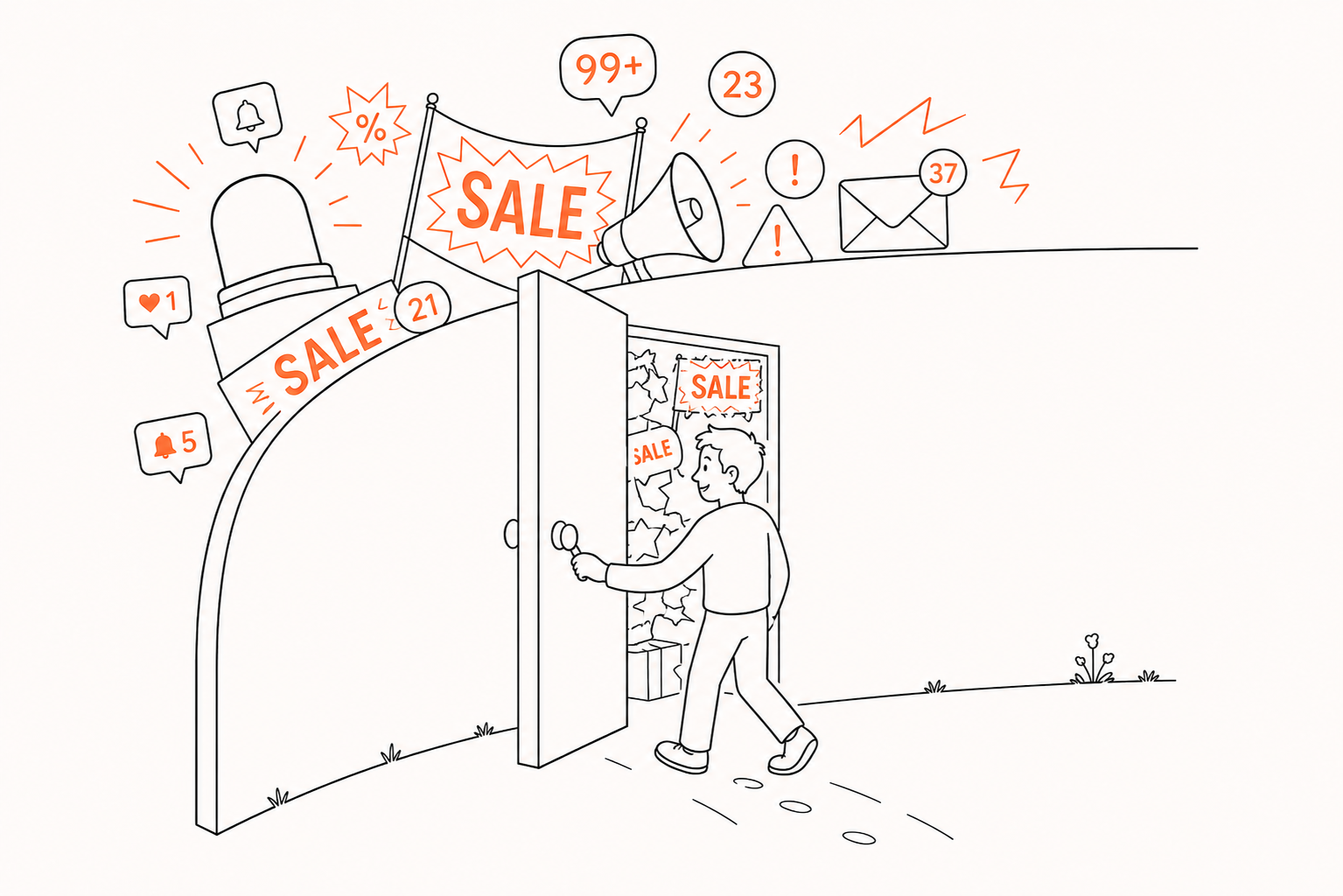
Now AI is flipping this. We've started opening the door ourselves from the inside. This article talks about that door and why it's changing in the age of personalised chatbots.
The door opens for things that seem like they belong to you
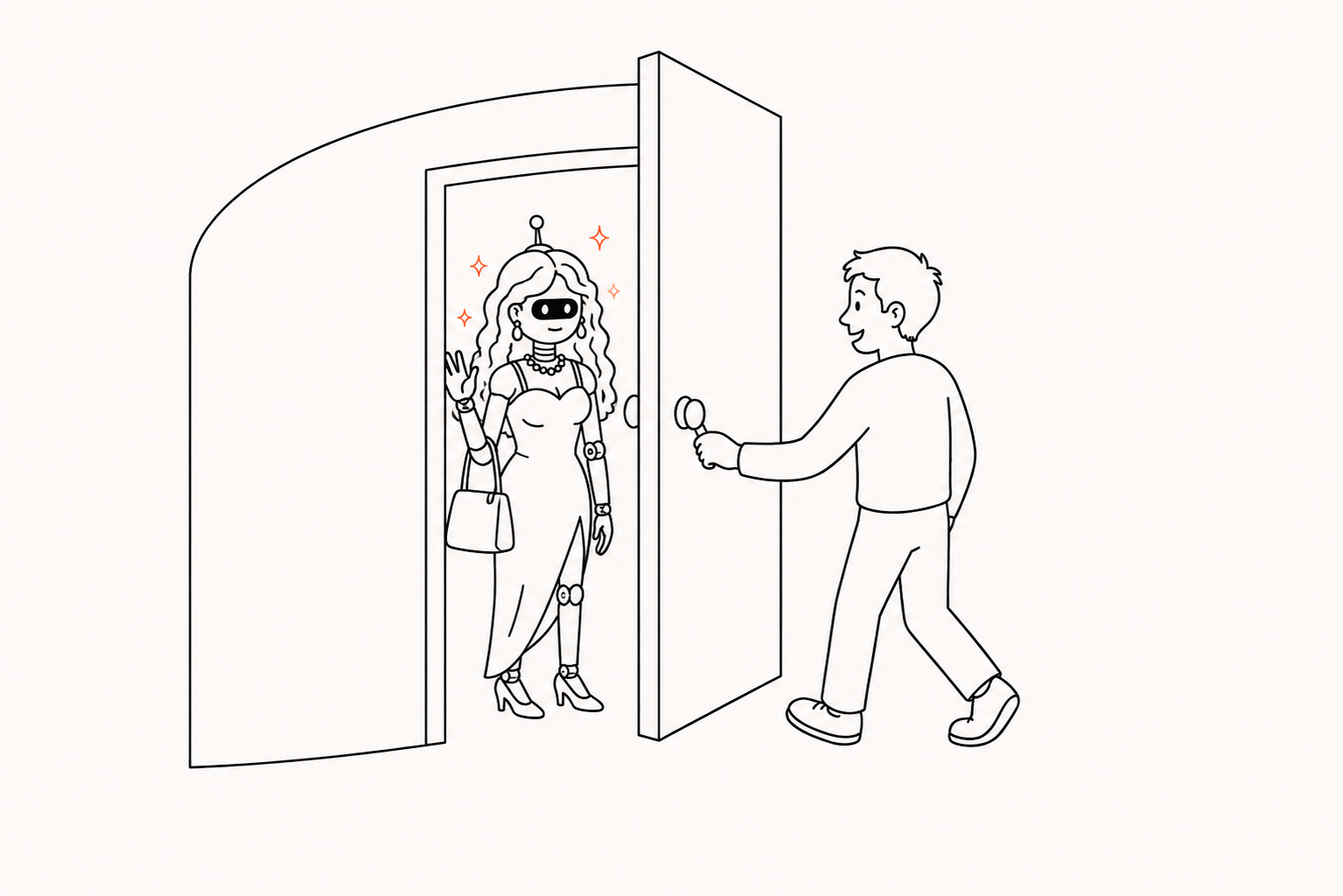
Your attention is a door that opens for whatever it recognises as relevant to you specifically. When you're at a party, 10s of people around you are having conversations you're not listening to. But then one of them mentions your name and suddenly you hear it.
The door doesn't necessarily open for whoever makes the loudest noise outside. It opens for whatever looks like it belongs to you.
If you're a marketer or a behavioural designer (which is someone who is paid to design addictive interfaces), you'll understand that the way in isn't to break the door down. Instead it's look like something the door is meant to let through. So everything really comes down to one question: how well does the thing outside know you? The better it knows you, the better it can seem relevant to you, and the more easily it gets in.
You don't really hold the handle (by evolutionary design)
It's easy to object to this: can't we just keep the door closed unless the thing outside is something productive? The problem with this is that it assumes that our attention is easy for our conscious minds to control. The door may be owned by you, but it's pretty autonomous.
There are two separate things that control the orientation of your attention - consciously by yourself, and unconsciously by the world. Corbetta and Shulman found the brain system behind that second controller in 2002 and called it a "circuit breaker." It interrupts whatever you're doing and drags you toward whatever just happened. This is actually good by evolutionary standards! When we lived in the wild, it was pretty useful to be distracted by a rustle in the grass. Otherwise we'd just keep getting eaten by tigers.
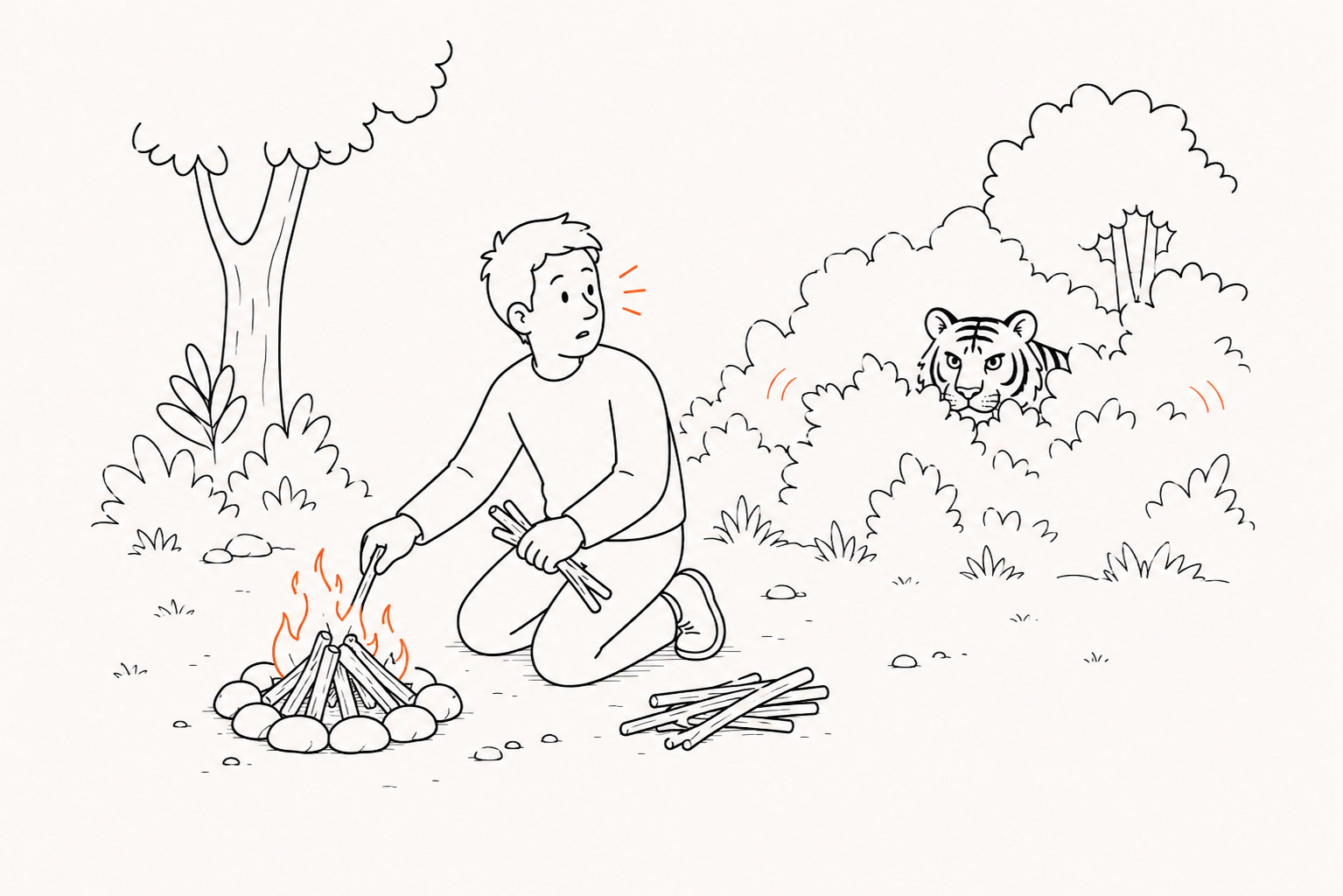
But this means that it is literally in our biology for our attention span to be beyond our control. And addictive behavioural designers study exactly how to exploit this. They designed notifications to be like manufactured rustles in the grass.
So now we understand that the door will open to something that seems relevant to you, the next step is to figure out exactly what are the most relevant things to any given individual at any given time.
The old way in: guessing from outside
The attention economy has been around for a lot longer than social media. Herbert Simon famously said it in 1971 - "a wealth of information creates a poverty of attention." What he didn't see coming was an entire industry built on creating that poverty. Tristan Harris calls these constant grabs for attention the "race to the bottom of the brainstem." None of this is an accident, and the people who built it mostly say so. It always makes me laugh (sadly) to see how regretful Tim Kendall looks in The Social Dilemma.
Social media turns the attention economy to 9000. When you sign up it doesn't really know who you are, so it pokes at you. It shows you some piece of content and checks to see if you slow down or interact with it. It builds a picture of your markers by your clicks, hovers, what you scrolled past, what time you went quiet, and a bunch of other things that even the algorithm designers have lost track of.
It works… and it works well. YouTube's recommender got so good at watch time that the company said it drove about 70% of everything watched on the platform, rather than people searching for specific content. And we've normalised it so much that I bet no-one reading this is surprised by that statistic.
This algorithmic way only ever sees your outside and your behaviour. It can work out that you slow down for a certain kind of face, or a certain type of news, but it doesn't really know why.
The new way in: you open the door yourself
When you use an AI chatbot, it's not taking any guesses at who you are, you're just straight-up telling it.
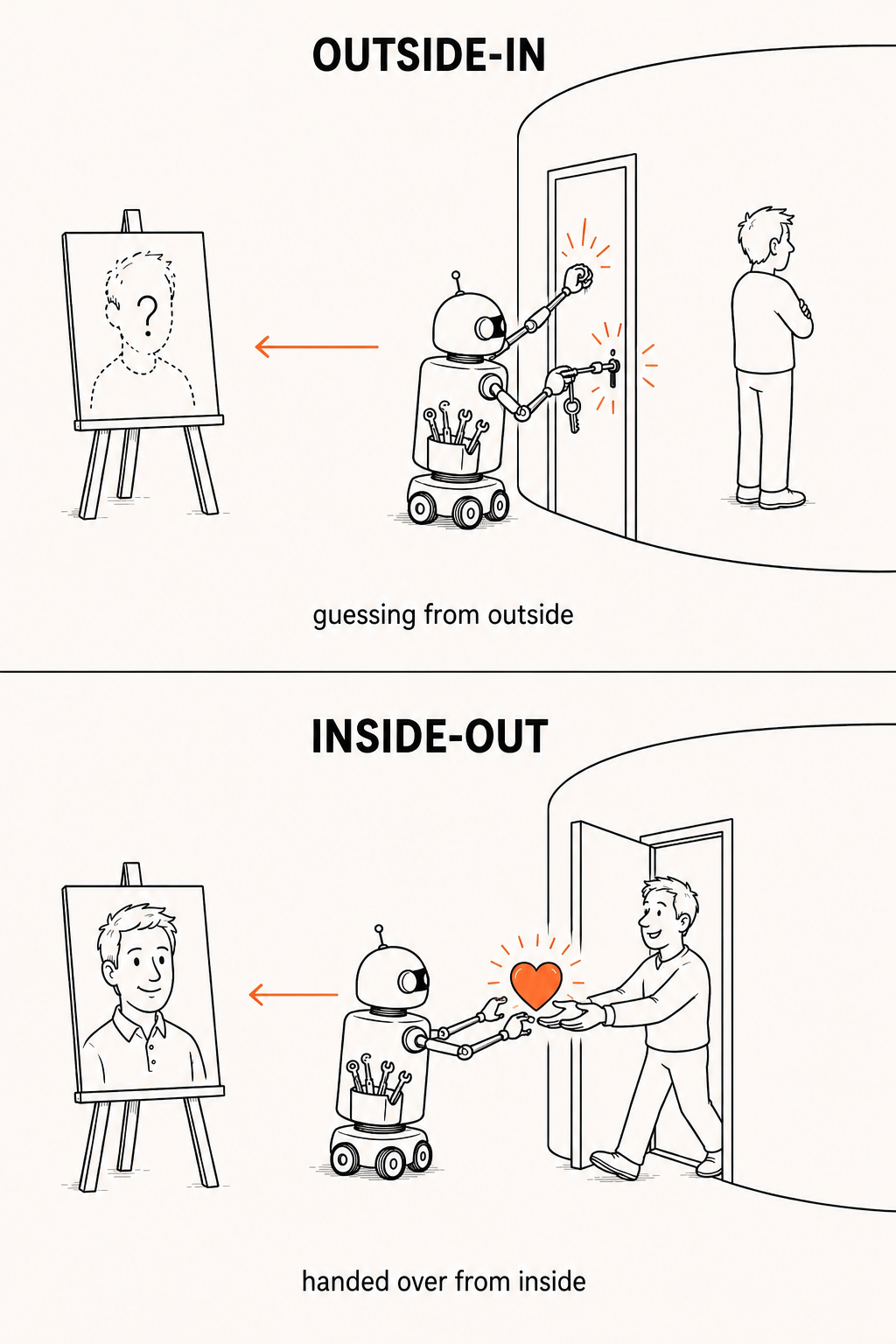
This is one of the warnings that the Center for Humane Technology has been making about this generation of AI. They say our inner world is "a sacred, intangible space filled with our feelings, desires, and beliefs," and getting in there "historically required our consent."
AI products now pull our innermost thoughts out of us through interfaces specifically built to feel intimate. It uses that to quietly reshape our inner world and our views on the outer world. People don't really see the danger in this though, and most active ChatGPT users consciously turn on the memory feature. Multiply that across millions of people and every part of life, and you get an "infrastructure for psychological intrusion."
We tell chatbots things that we'd never click on or search or even say to another human. People are already using them as therapists. This emotional relationship makes people much more likely to reject the idea that they're addicted.
However the therapist is not optimised for your wellbeing. AI labs eventually need to make money, and they are already realising that ads are a successful business model. What a wonderful dystopia we live in.
The goal of social media was never to predict you, but to shape your actions. The most successful algorithms would make you stay on the platform, click on ads, and buy things. Like Shoshana Zuboff says, it was about "trading in human futures… It is no longer enough to automate information flows about us. The goal now is to automate us."
AI is already able to shift our feelings, relationships, and what we think is truth. And they feel like our idea because it came from something that feels like it's on our side.
Don't forget what side you're on
Every single thing that you believe, want, do, enjoy, and the things that inspired you to become the person you are had to come through that door at some point. Whatever comes through that door dictates who you are as a person.
This article frames all of this quite negatively, but it can be good news. The door is the only mechanism you have for becoming anything on purpose. When you read or make new friends you are deciding that they're allowed through your door. The door itself isn't the problem, but if you spend years of your life letting AI decide what comes through that door, that's where the problem arises. You'll just become a minion of whatever your chatbot decides you should be.
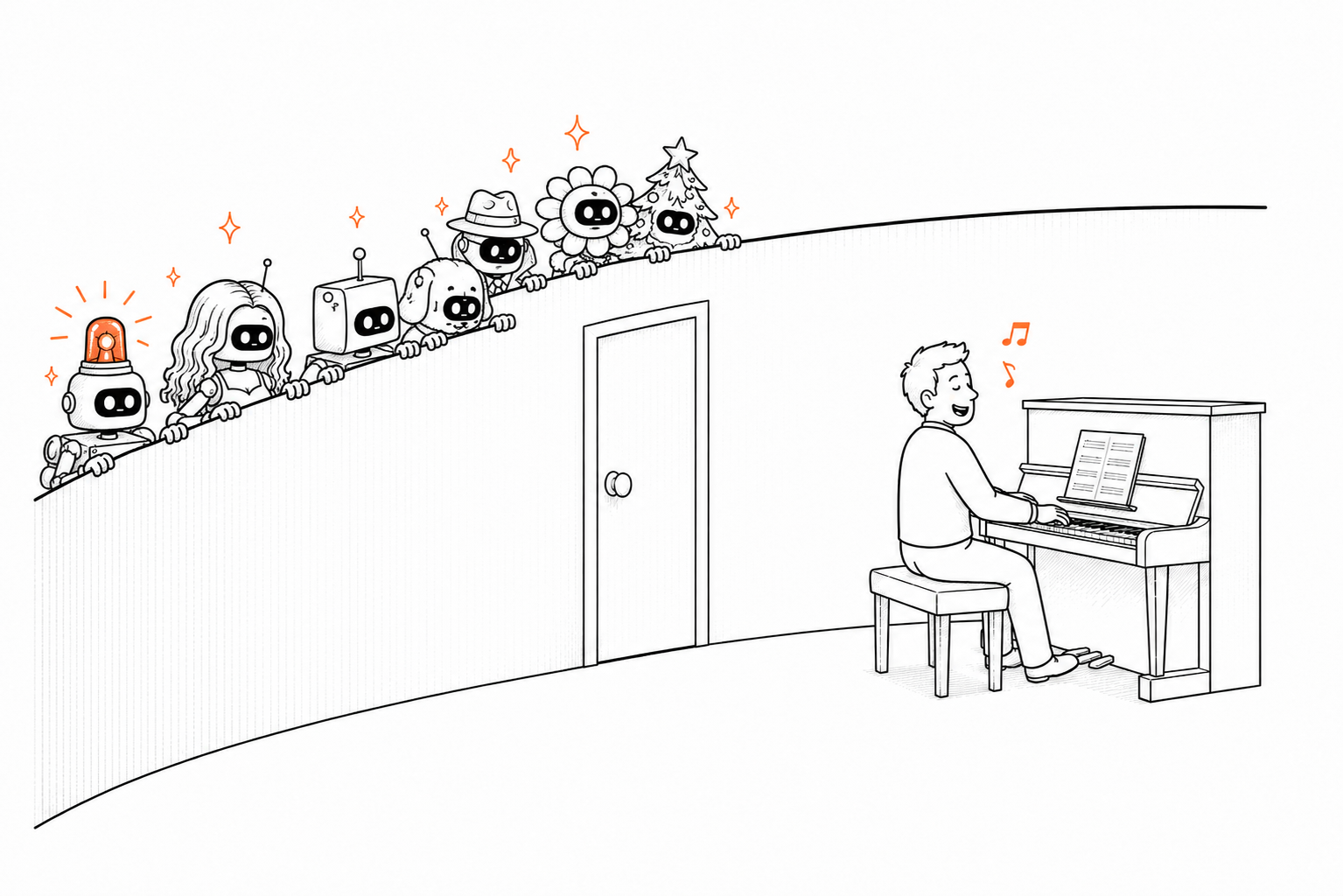
I think I can give advice here, because for the past 8 or so years I've been attempting to control my door as much as possible. So my advice to you is this - you cannot avoid distractions, so try to avoid giving ammo to the things trying to distract you. Keep your inner world offline as much as possible.
The door is yours. Give yourself the freedom to decide what gets in.